

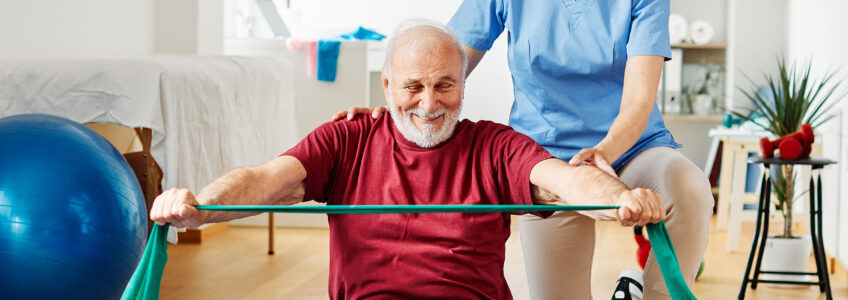
Learning that your loved one had a stroke is a scary point in life. A stroke can have many different consequences for the person having it and their family. While it’s wonderful news that your loved one is a stroke survivor and is ready to move back home to continue their recovery, family members who care for them need to understand that the road ahead of them is not a short trip or a quick sprint. In-home occupational therapy can help.
It is often a long marathon filled with successes and setbacks, and having a good professional support team, including occupational therapy, will help make this journey easier and smoother for them and their loved one.
Preparing the Home for Your Loved One
Whether your loved one comes to live with you after their stroke, you decide to stay with them, or they have some type of in-home care and occupational therapy support to assist them with their daily living needs, there may be areas of the home you’ll need to update and prepare for their stay and new possible limitations they may have. The goal for your loved one’s new or updated home environment is to promote independence, reduce the risk of falls, and enable many activities again, perhaps with assistive devices.
Depending on which areas of your loved one’s mobility and cognitive abilities were altered due to the stroke, you’ll want to consider adding physical supports in areas like the bathroom and kitchen, adding ramps for entryways if needed, reducing clutter to reduce the risk of tripping and falling, and making items around the home easier for them to reach and access.
Relearning Activities Around the Home
While getting the home ready is important, your loved one may also need to relearn some basic household activities. Having occupational therapy at home is the best way for your loved one to receive customized care and guidance that fits their life and needs.
Some areas that occupational therapy at home can help with include:
- Finding the right resources for assistive devices around the home. Your occupational therapy team will know where to find whatever your loved one needs to use to manage their home with confidence and safety. Their knowledge can save you hours of searching for the best products for your loved one.
- Coming up with solutions for home limitations. While an occupational therapist may suggest certain adaptations to a home, if they are in your home, they can see other alternatives when the standard suggestions will not be adaptable to your loved one’s living environment. Occupational therapy at home teams understand that one size does not fit all.
- Physical exercises that both encourage your loved one to participate and rebuild abilities that may have been lost or hindered due to the stroke.
- Emotional and mental health resources if your loved one is struggling emotionally with the changes and challenges they are now facing. Mental health is just as important as physical health.
- Menu planning. Some stroke victims struggle with eating after the stroke and need an altered diet while they relearn movements like chewing and swallowing.
- Support for family members and caregivers as they work alongside their loved one during this recovery time.
Stroke recovery is often a long process, but with a great support team and in-home occupational therapy, everyone benefits.
If you or someone you know needs Occupational Therapy in St. Cloud, MN, contact Adara Home Health. We provide quality and affordable home care services for many fragile or senior members in the communities we serve. Call us at (888) 525-7742 for more information.